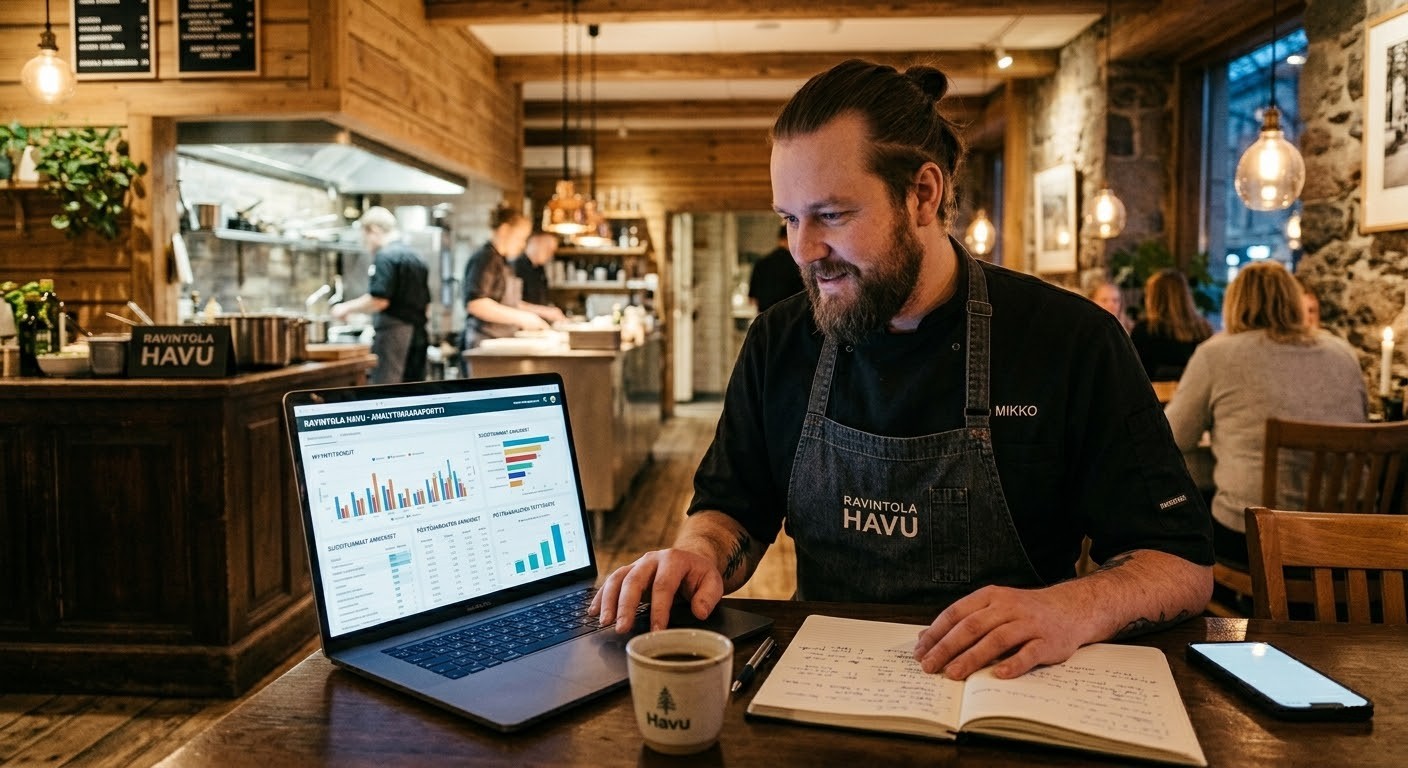
I've spent the last year talking to restaurant owners across Finland and the Nordics about their social media. Some are thriving. Most are struggling. And the gap between the two groups comes down to a handful of things that have nothing to do with follower counts or viral reels.
Here's what I've learned about what actually works for restaurant social media in 2026 — and what's a waste of your time.
The restaurants winning on social media aren't the fanciest
This surprised me at first. Some of the most effective restaurant social media accounts I've seen belong to small lunch spots and neighborhood cafes, not Michelin-starred restaurants.
Why? Because they post consistently. A lunch restaurant in Tampere that posts their daily menu every morning at 10:00 will outperform a fancy restaurant that posts a beautiful photo once every two weeks.
The algorithm rewards consistency over quality. That's not to say quality doesn't matter — but a decent photo posted every day beats a perfect photo posted rarely.
Video is important, but not how you think
Yes, Reels and short videos get more reach than static posts. But here's the thing: most restaurant owners don't have time to edit videos. And that's perfectly fine.
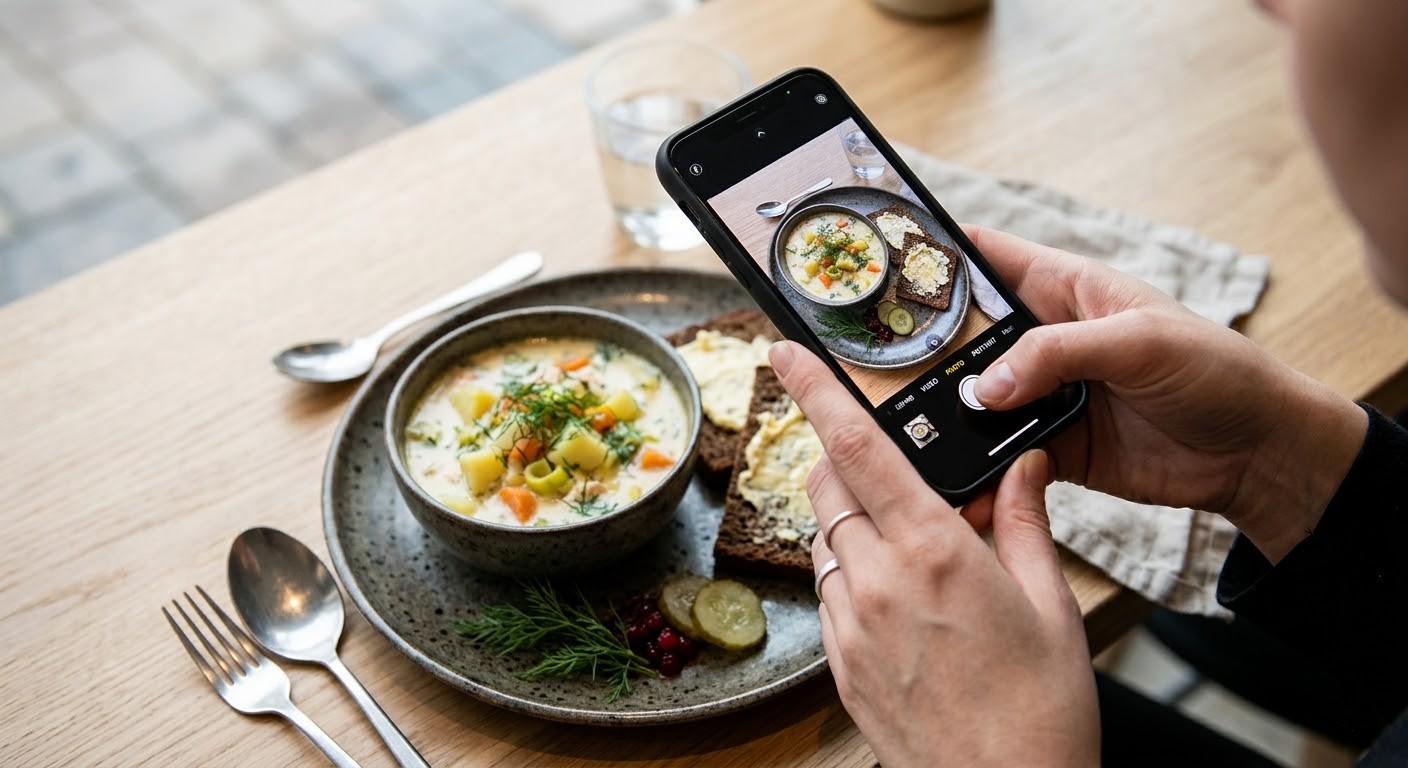
The videos that work best for restaurants aren't edited productions. They're raw, 15-second clips: a pan sizzling, dough being stretched, a finished plate being placed on the pass. No music overlay, no text effects, no transitions.
Your kitchen is inherently visual and interesting. Just point your phone at something happening and press record. That's it.
The best-performing restaurant video format in 2026: overhead shot of a dish being plated, 10-15 seconds, no audio editing. Post it as a Reel with your daily caption.
Posting time matters more than you think
For lunch restaurants, there's a clear sweet spot: 9:30 to 10:30 in the morning. That's when people start thinking about where to eat. If your menu post is sitting in their feed at that moment, you've already influenced their decision.
For dinner restaurants, the window is 15:00 to 17:00 — when people are winding down at work and starting to think about evening plans.
Weekend brunch spots should post Friday evening. That's when people make weekend plans.
These aren't guesses. We've looked at engagement data from hundreds of restaurant posts across the Nordics, and the pattern is remarkably consistent.
AI is now a real tool, not a gimmick
A year ago, most restaurant owners I talked to were skeptical about AI for content creation. "It'll sound robotic," they'd say. And honestly, early tools did produce generic, stilted text.
That's changed. Modern AI tools can write captions that sound natural, understand food terminology, and even adapt to local culture. A good AI tool knows that a Finnish lunch post should mention the price and serving hours, while an Italian restaurant's evening post should emphasize atmosphere and wine pairing.
The key is using AI as a starting point, not a replacement. Let it draft the caption, then adjust a few words to make it yours. That's 2 minutes instead of 15.
Multi-platform posting is non-negotiable now
In 2024, you could get away with just Instagram. In 2026, your customers are spread across Instagram, Facebook, LinkedIn (especially for business lunches), and increasingly Threads.
The good news: you don't need different content for each platform. The same post works across all of them. What you need is a way to publish to all of them at once instead of opening each app separately.
I've seen restaurant owners who spend 30 minutes posting the same content to four platforms manually. That's time that should be spent in the kitchen or with customers.
Reviews are part of your social media strategy
This is something most restaurants overlook. Your Google reviews, TripAdvisor ratings, and Facebook reviews are part of your online presence. When someone finds your restaurant on Instagram and then checks your Google reviews, those need to tell a consistent story.
Responding to reviews — especially negative ones — is visible to every potential customer who reads them. A thoughtful, calm response to a complaint often impresses readers more than the complaint itself.
Set aside 10 minutes twice a week to respond to reviews. It's one of the highest-ROI activities you can do for your restaurant's online reputation.
What doesn't work anymore
A few things that I see restaurants still doing that aren't delivering results:
- Posting only when you "feel inspired" — consistency trumps inspiration every time
- Using 30 hashtags — the algorithm has moved past this; 5-8 relevant ones is optimal
- Buying followers — fake followers actively hurt your reach by lowering engagement rates
- Posting only promotional content — mix in behind-the-scenes, stories, and personality
- Ignoring DMs and comments — social media is social; respond to people
The minimum viable social media strategy
If you're a restaurant owner reading this and feeling overwhelmed, here's the simplest strategy that will get you 80% of the results:
- Post your daily menu or a dish photo every single day at the same time
- Use 5-8 consistent hashtags
- Respond to every comment and DM
- Post to all your platforms at once (use a tool or do it manually)
- Check your reviews twice a week and respond
That's it. Five things. None of them require design skills or marketing expertise. They require consistency.
The restaurants that win on social media in 2026 aren't the ones with the biggest budgets or the most creative content. They're the ones that show up every day. That's all it takes.
ChefPost helps restaurants shine on social media with the power of AI.